
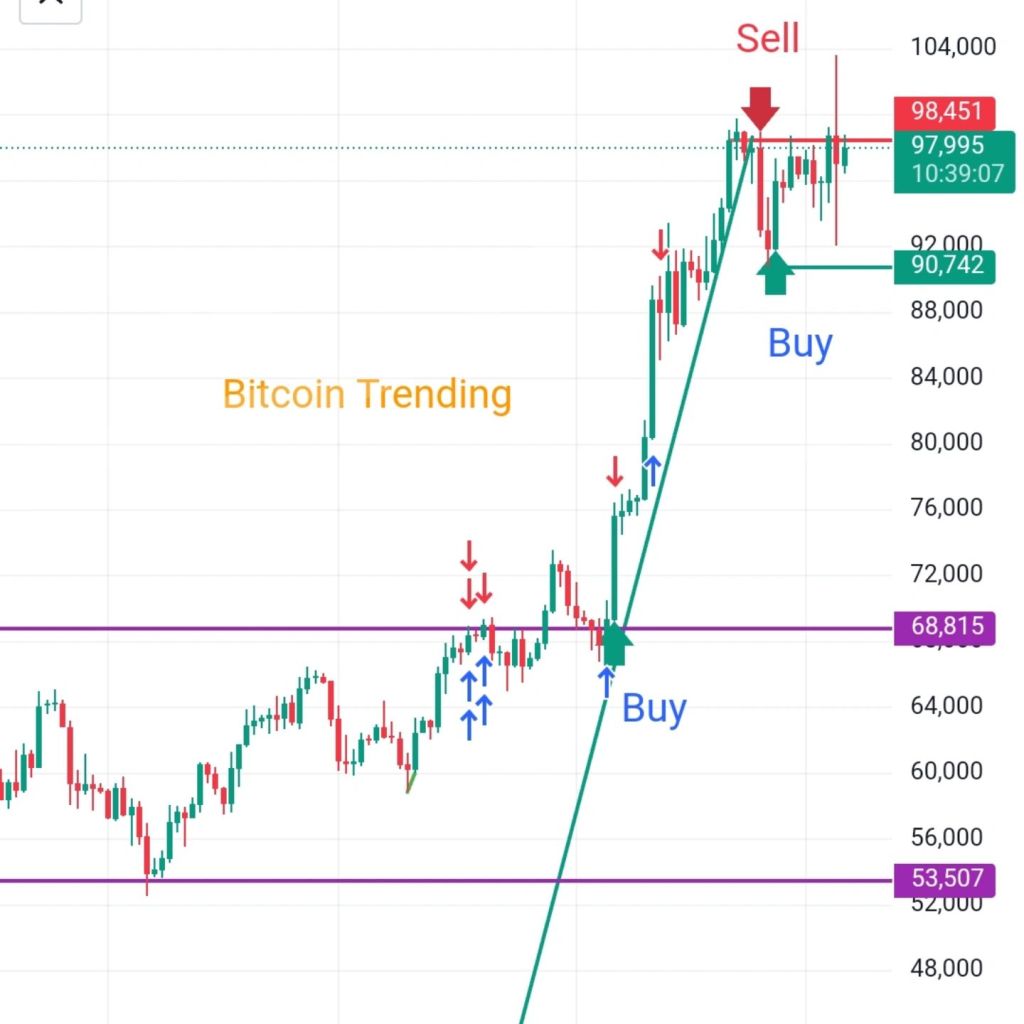
Introduction
In the realm of financial trading, the methods by which traders make decisions can be diverse and varied. Two prevalent methodologies that have emerged are price action trading and trading with indicators. Price action trading relies on the historical price movements of assets, while trading indicators uses mathematical formulas derived from price and volume data to assist in decision-making. Understanding the nuances, historical context, and contemporary relevance of these approaches can equip traders and investors with the tools necessary for navigating the complexities of financial markets.
This essay delves into the intrinsic qualities of price action and trading indicators, analyzing their respective advantages and disadvantages. We will explore historical perspectives that have shaped these methodologies, examine their contemporary relevance in today’s digital trading environment, and highlight the implications of choosing one over the other. By grounding the discussion in various viewpoints, we aim to present a well-rounded narrative that emphasizes the significance of these trading strategies in the financial domain.
Historical Context
The evolution of trading methods can be traced back to the inception of asset markets. From the early days of barter systems to contemporary stock exchanges, traders have sought to understand price movements to inform their buy and sell decisions.
Price Action Trading Origins and Development
Price action trading can be seen as one of the oldest strategies employed by traders, relying on the notion that all relevant information—economic indicators, news events, and market sentiment—is reflected in the price. This methodology gained prominence in the mid-20th century when traders such as Richard Wyckoff and Jesse Livermore laid the groundwork for technical analysis based on price movements.
As technology advanced, so did the capabilities for analyzing price trends. The rise of personal computers in the late 20th century allowed traders to quickly analyze charts and develop strategies based on price action without needing extensive mathematical or statistical knowledge.
Trading Indicators: Emergence and Impact
In contrast, trading indicators emerged from the need for a systematic approach to understanding market behavior. The development of technical indicators began in the early 20th century, with the advent of concepts such as moving averages and the Relative Strength Index (RSI). These indicators were created to provide traders with visual and quantifiable metrics for market trends and price momentum.
By the 1970s and 1980s, with the democratization of trading through brokerage services and trading platforms, the use of indicators became widespread. Traders combined technical analysis with algorithmic trading, which relied heavily on indicators to make decisions.
The Rise of Technological Tools
The digital revolution in the 21st century further transformed trading disciplines. High-frequency trading (HFT) firms began to dominate the markets, utilizing complex algorithms and a plethora of indicators to make rapid trading decisions. As free trading platforms emerged, the accessibility of both price action methodologies and trading indicators allowed retail traders to participate in the markets like never before.
The Philosophical Divide: Price Action vs. Trading Indicators
At the core of the ongoing debate between price action and trading indicators is a philosophical divide regarding market behavior and decision-making.
Advocates of Price Action Trading
Proponents of price action trading argue that this methodology offers a more intuitive approach. By focusing solely on price movements, traders can avoid the noise that often accompanies indicators. This simplicity allows for better adaptability to changing market conditions and emphasizes a reader’s ability to interpret market psychology.
Furthermore, price action trading encourages traders to develop a contextual understanding of the market. For example, an experienced price action trader can analyze candlestick patterns—such as pin bars or engulfing candles—to determine potential reversals or continuations. This subjective analysis can yield a deeper understanding of market sentiment and potential future movements.
Advocates of Trading Indicators
Conversely, supporters of trading indicators believe that mathematics and quantifiable data provide a reliable framework for making informed decisions. Indicators often help to synthesize complex data into digestible pieces of information. For instance, where a price action trader may need to consider multiple contexts, an indicator like the Moving Average Convergence Divergence (MACD) can give a straightforward buy or sell signal.
Additionally, indicators can facilitate backtesting strategies, allowing traders to evaluate the effectiveness of their strategies using historical data. This scientific approach can lead to greater consistency, which is particularly appealing for traders who prefer systematic and rules-based trading methods.
Comparative Analysis
To fully grasp the merits of each trading methodology, it is essential to analyze their strengths and weaknesses.
Strengths of Price Action Trading.
Price action trading relies on charts with minimal clutter, emphasizing clean price data interpretation. This simplicity can reduce cognitive overload and help traders avoid analysis paralysis.
Most price action strategies can be applied across various timeframes – day trading, swing trading, or long-term investing. This adaptability allows traders to adjust their approaches based on market conditions.
Understanding price movements enhances a trader’s ability to perceive market structures, including support and resistance levels, trends, and reversals.
Price action trading takes into account the psychology of market participants. Traders can react accordingly to market sentiment based on what price action suggests.
Weakness of Price Action Trading Subjective
Interpretations of price action can vary between traders, leading to inconsistent decision-making. What one trader perceives as a bullish setup, another may view as a bearish one.
Mastering price action requires a deep understanding of market mechanics and significant experience. New traders may struggle to interpret price movements effectively.
Price action can produce many false signals, especially in volatile markets. Without additional confirmation, traders may act on erroneous setups.
Strengths of Trading Indicators
Indicators provide clear and objective buy/sell signals, allowing traders to make data-driven decisions quickly.m
Traders can analyze historical data to evaluate strategies and set performance metrics, lending credibility and reliability to a trading plan.
The mathematical nature of indicators helps reduce personal biases in trading decisions.
Weakness of Trading Indicators Lagging Nature
Most technical indicators are lagging, meaning they rely on past price data, which may result in late entries or exits.
Overcomplication
With numerous available indicators, traders may experience confusion and difficulty separating profitable indicators from non-useful ones.
False Sense of Security
Traders may rely too heavily on indicators, leading to overconfidence or complacency in their trading strategy, resulting in missed opportunities.
Counterarguments and Reconciliation
While each methodology offers compelling advantages, it is essential to consider potential counterarguments:
Expertise vs Accessibility
Proponents of trading indicators argue that their methods offer easier accessibility for novice traders. They contend that relying on mathematical data allows new entrants to grasp market dynamics without extensive experience. Conversely, advocates of price action assert that without understanding underlying market mechanics, reliance on indicators can lead to pitfalls.
Adaptation vs Automation
Price action advocates believe flexibility in trading enhances decision-making, while indicator supporters argue for the reliability of automated decision-making. The challenge lies in striking a balance between human intuition and systematized approaches to trading.
Integrating Both Approaches
Rather than viewing price action and trading indicators as opposing methodologies, many traders have found success in integrating the two. Combining insights from price action with confirmations from indicators allows for a more robust trading strategy. For instance, a trader might use price action to identify a potential breakout and employ an indicator like the RSI to confirm momentum.
In the fast-paced environment of modern financial markets, the discourse on price action versus trading indicators continues to evolve. The rise of machine learning and artificial intelligence has introduced sophisticated algorithms capable of processing vast amounts of market data, giving rise to entirely new forms of trading strategies.
Current Trends
Hybrid Strategies
Many contemporary traders employ hybrid strategies that utilize both price action and indicators, thereby leveraging the strengths of each approach while mitigating their weaknesses.
Increased Technical Literacy
With the proliferation of online trading education and resources, traders increasingly demonstrate technical proficiency, allowing for a blended application of both methodologies.
Automated Trading
Algorithmic trading continues to disrupt traditional trading paradigms. Traders now have access to platforms capable of executing trades based entirely on predefined criteria that encompass indicators and price action levels.
Market Volatility
In the current era of economic uncertainty and market volatility, traders are gravitating toward strategies that emphasize contextual awareness, such as those espoused by price action traders.
Understanding the dynamics between price action and trading indicators has far-reaching implications for the trading community and the financial markets. First, the choices that individual traders make can have an aggregate impact on market behavior, influencing trends and volatility. Furthermore, the divergent styles of trading play into the larger discussion of market psychology and behavior.
Impact on Society and Culture
The financial markets are not only economic ecosystems but are also socially and culturally significant. They reflect investor sentiment, aspirations, and reactions to global events. The methodologies used by traders contribute to shaping the broader narrative around economic prosperity, wealth distribution, and financial literacy.
The growing accessibility of trading tools and platforms has democratized trading, allowing individuals from diverse backgrounds to partake in wealth generation. However, this accessibility also necessitates an awareness of the risks involved and the importance of informed decision-making.
Educating Future Traders
As financial markets become increasingly complex, the challenge lies in effectively educating future traders. Encouraging a critical understanding of both price action and indicators will equip traders to navigate market complexities and make informed decisions, fostering a healthier trading environment.
Conclusion
The juxtaposition of price action trading and trading indicators presents a rich field for exploration, characterized by historical evolution, contemporary relevance, and divergent philosophies. Price action trading emphasizes market intuition, flexibility, and psychological insights, while trading indicators appeal to those who prefer systematic, quantifiable approaches to market behavior.
Ultimately, the choice between these methodologies may not necessarily be an either/or scenario. Successful traders may find it beneficial to integrate elements of both, creating a personalized strategy that caters to their unique skill sets and market philosophies.
As trading continues to evolve within the digital landscape, ongoing inquiry into effective methods will remain essential for both novices and seasoned traders alike. The significance of understanding price action and trading indicators transcends individual trading success; it contributes to the broader dialogue on market dynamics and financial literacy in an increasingly interconnected world.
By fostering education and critical thinking in these methodologies, the financial community can better prepare for the fluctuations of the future, cultivating both innovation and responsibility in trading practices.

 Traders University